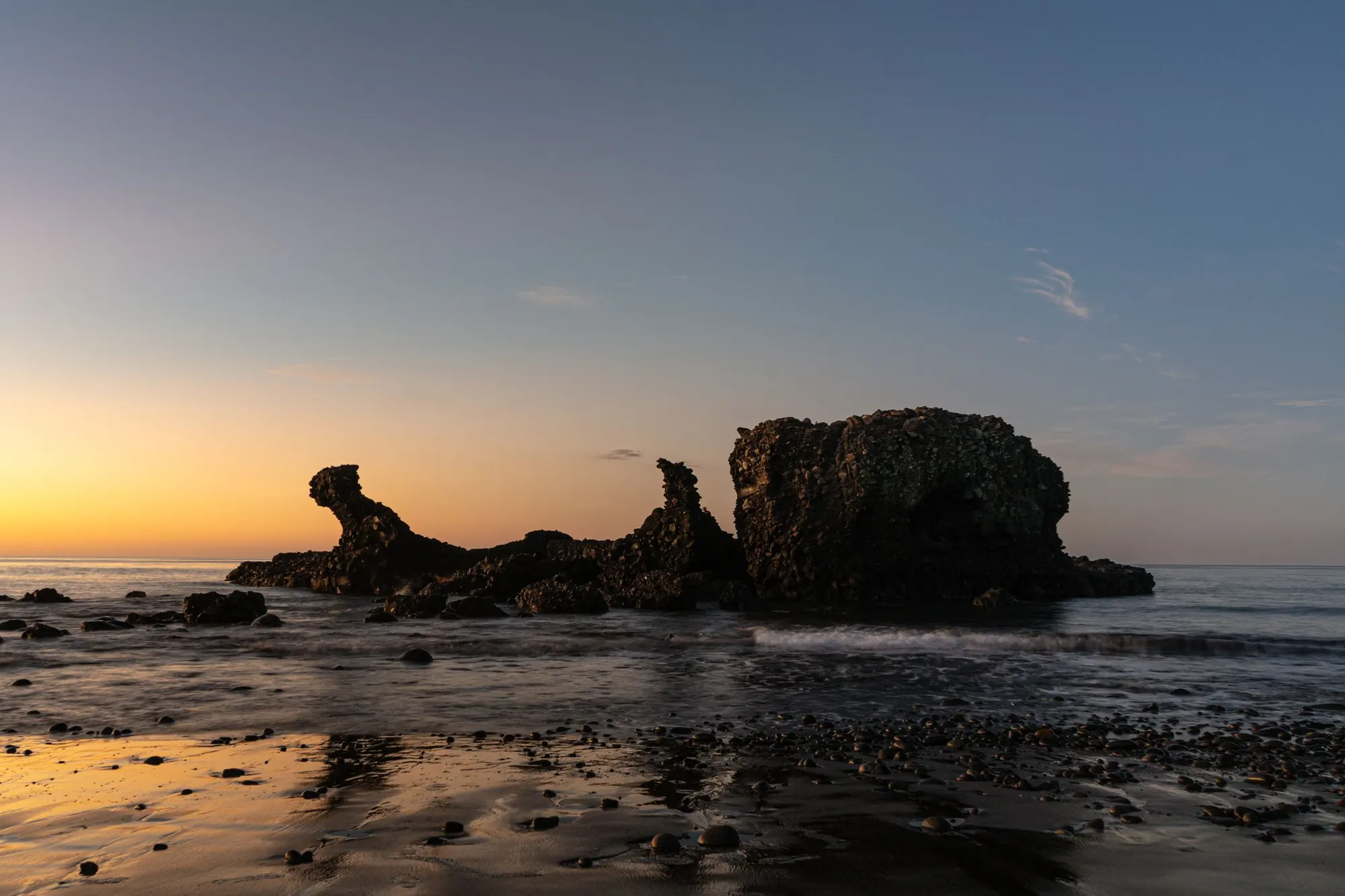
El Tunco and El Sunzal are in the Tamanique district and El Zonte is in the Chiltiupán district, both part of the La Libertad Costa municipality created in the 2024 municipal restructuring. Municipal fees and the solvencia municipal for these properties come from that municipality, and older deeds will name the former municipalities. The coast-specific questions are documented road access to the lot, the water source, drainage on slopes during the rainy season (roughly May to October), and whether the lot is in a subdivision covered by the 2012 lotificaciones law. Coastal setback and beach-access rules are not covered here; a Salvadoran attorney should confirm them for the specific parcel.
What to keep in mind
- Match the deed’s municipality and district names to the 2024 structure.
- A track you can drive on is not the same as a recorded right of way.
- See the lot in the rainy season, or get evidence of how it drains.
Which municipality covers El Tunco, El Zonte and El Sunzal?
The Ministry of Tourism’s Surf City listing places El Tunco in Tamanique, La Libertad Costa; El Sunzal in Tamanique; and El Zonte in Chiltiupán, La Libertad Costa. Under the 2024 municipal restructuring, El Salvador’s 262 municipalities became districts grouped into 44 municipalities. The La Libertad Costa municipality is made up of the districts of Chiltiupán, Jicalapa, La Libertad, Tamanique and Teotepeque.
That means the solvencia municipal, the municipal account and any local permits are handled by La Libertad Costa, with the district named on the documents. The CNR Property Registry is organized by department under Article 2 of the registry restructuring law; ask the notary which registry office holds the matrícula.
- El Tunco: Tamanique district, La Libertad Costa
- El Sunzal: Tamanique district
- El Zonte: Chiltiupán district, La Libertad Costa
- Port of La Libertad: La Libertad district, La Libertad Costa
Why do the old municipality names matter in a deed?
A deed signed before May 2024 describes the property as located in the municipio (municipality) of Tamanique or Chiltiupán. Later documents may name the same place as a district of La Libertad Costa. The registry entry, the cadastral record, the municipal account and the seller’s deed can therefore use different names for the same land.
That is normal, but it is also where a wrong parcel slips in. Match the property on matrícula and cadastral key, not on place names. Invest in El Salvador lists location, area and boundaries as required parts of the deed’s property description; ask your notary to check that each document points to the same parcel.
Diario El Mundo: the 44 municipalities and 262 districts (April 2024)
Keep the observation, explanation, and assessment separate.
A ceiling patch is visible.
Record the location, visit date, and photo reference.
“It was repaired last year.”
Record who said it and request the repair history.
Is further investigation needed?
A qualified specialist assesses the cause and implications.
Fictional example. A visible observation is not a technical diagnosis.
Does the lot have documented road access?
Many hillside lots on this coast are reached by private tracks across neighboring land. Being able to drive in now does not show a right to keep doing so. Ask whether access is over a public road, over a recorded servidumbre (easement), or by informal permission. Article 1605 of the Civil Code requires a sale of a servidumbre to be in a public deed, so a right of way bought from a neighbor should appear as a deed and, ideally, in the registry.
Ask for a certificación literal of any easement shown on the certificación extractada. If access depends on a track that crosses several properties, each crossing is a separate question for your attorney and your surveyor.
- Is the access road public or private?
- Is there a recorded servidumbre? Get a literal copy.
- Does the easement reach the lot boundary or stop short?
- Who maintains the track, and in which season is it passable?
Where does the water come from?
Water supply varies lot by lot on this coast. Ask the seller to put the source in writing: a utility connection, a well on the property, a shared well, or a system run by a developer or community. Ask for twelve months of bills or, for a well, any records of depth, pump replacement and water tests.
For a lot without a connection, ask what it would take to get one and who has to approve it. For a condo, ask how the building stores water and what happens during an outage. Do not assume a neighbor’s connection means yours is available.
- Source in writing from the seller
- Twelve months of bills, or well records
- Storage tank size and condition
- Who approves a new connection
How does the lot behave in the rainy season?
El Salvador’s rainy season runs roughly from May to October, and the coastal hills west of La Libertad are steep. A lot that looks dry in March can carry runoff from the road above it in September. Ask the seller for photos or video taken during heavy rain, and look for erosion, retaining walls, drainage channels and stains on walls.
The 2012 subdivision law excludes from its scope lotificaciones in river and ravine protection zones and in risk zones. If a lot is near a quebrada (ravine), ask your attorney whether any protection zone or risk classification applies, and ask an engineer about slope stability before you plan construction.
Ley Especial de Lotificaciones y Parcelaciones para Uso Habitacional (D.L. 993, 2012)
Lots, small developments and rentals on the coast
If you are buying one lot out of a larger property, the 2012 lotificaciones law may apply. Under Article 4, a lot sold on installments must already have its own matrícula, and the developer must be registered. If you are buying into a small condo building, the condominium law applies, and the reglamento decides what you may do with the unit.
Many coastal buyers plan short-term rentals. A June 2026 Consortium Legal analysis says short-term rental use raises questions about commercial licenses and municipal taxation, and that a condo reglamento can restrict it. Ask La Libertad Costa what registration a rental needs before you count on rental income.
Consortium Legal: condominium regime and high-rise construction in El Salvador (June 2026)
What should an on-site visit record?
A remote buyer needs evidence that can be checked later. Ask for dated photos and video that show the access road from the paved highway to the gate, the lot corners or fences, any structures, the water source, and the drainage path. Get GPS coordinates for the corners and compare them with the cadastral plan.
A Salvadoran attorney or notary should confirm the legal points for the specific parcel, including any coastal or environmental rules this guide does not cover.
- Video of the full access route, with time stamp
- Corner markers or fences, with GPS points
- Water source and storage
- Drainage paths, erosion and retaining walls
- Neighboring uses that affect noise or access
Common buyer questions
Which municipality is El Tunco in?
El Tunco is in the Tamanique district of the La Libertad Costa municipality, per the Ministry of Tourism’s Surf City listing and the 2024 municipal restructuring.
Which municipality is El Zonte in?
El Zonte is in the Chiltiupán district of the La Libertad Costa municipality.
Where do I get a solvencia municipal for a property in El Tunco or El Zonte?
From the La Libertad Costa municipality, which since May 2024 groups the districts of Chiltiupán, Jicalapa, La Libertad, Tamanique and Teotepeque.
Can foreigners buy beachfront property in El Salvador?
Foreigners buy through the same notarial process as Salvadorans, with the Article 109 condition on rural land. Rules on the beach zone itself are not covered in this guide; ask a Salvadoran attorney for the specific parcel.
Sources and editorial notes
- Ministerio de Turismo: Surf City beaches
Official tourism listing placing El Tunco and El Sunzal in Tamanique and El Zonte in Chiltiupán, La Libertad Costa.
- Diario El Mundo: the 44 municipalities and 262 districts (April 2024)
News list of the municipalities created by the 2024 municipal restructuring law, including La Libertad Costa and La Libertad Sur.
- Ley de Reestructuración del Registro de la Propiedad Raíz e Hipotecas (D.L. 292, 1986)
Adopts the folio real system (Art. 5) and one matrícula per property (Art. 7).
- Invest in El Salvador: Steps for a Foreigner to Purchase Property
Official overview of the foreign-buyer process. Confirm the current requirements with your Salvadoran professional.
- Código Civil de El Salvador
Arts. 667, 680 and 683 (registration and third parties), 1425 (promise to contract), 1605 to 1610 (sale formalities, arras, costs) and 1634 to 1637 (sale by area or as a whole).
- Ley Especial de Lotificaciones y Parcelaciones para Uso Habitacional (D.L. 993, 2012)
Supreme Court documentation centre text. Art. 4 requires an individual registry matrícula before lots are sold on installment terms; Art. 14 sets installment contract contents.
- Consortium Legal: condominium regime and high-rise construction in El Salvador (June 2026)
Law-firm analysis of the condominium law and municipal fees for condominium units in San Salvador.
Official references consulted October 12, 2026. Check current requirements with the responsible professional.
Prepared by PropertyProof editorial as a buyer checklist. No property has been reviewed for this article. Property-specific legal or technical conclusions require qualified professionals; professional legal review of this content is pending.
How we separate evidence, statements, and unknownsOn-site condition review
Plan a local condition review with photo and video evidence, clear observations, and referrals for issues that need specialist testing.
Read the planned scopeJoin this service waitlistForthcoming service. No payment to join.